
Closing the gap between Research and Reality: the contribution of Abrar Ahmed Syed to the development of AI-based healthcare analytics
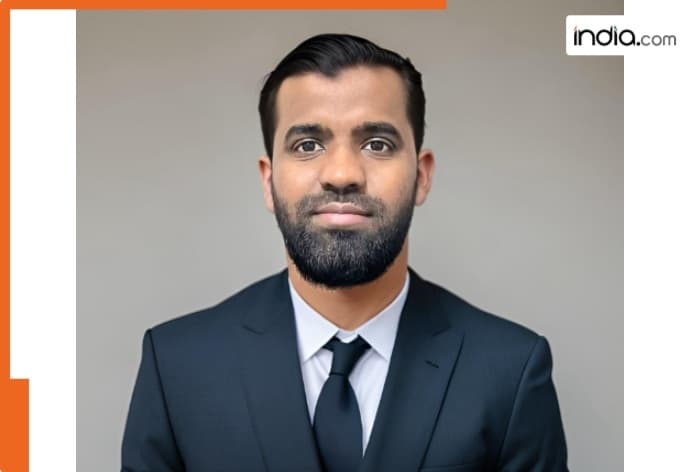
Abrar Ahmed Syed is contributing to the redesign of the ways governments, researchers, and healthcare systems utilize data in order to provide care at scale. He is an Advisor Application Designer at Gainwell Technologies and has become a pioneer in cloud-based analytics solutions that transform large amounts of healthcare data into useful intelligence to policymakers, providers, and researchers alike. His most important creation is the architecting Analytics platform, a mission critical system deployed by state healthcare departments to inform policy, payments and care delivery. Being the lead architect, Abrar developed a very scalable analytics platform that could handle millions of healthcare claims and still comply with high standards of compliance, accuracy, and disaster recovery. In addition to the large-scale systems of production, Abrar has penetrated to the academic and applied research. He is a published author who has several IEEE research papers and in which he discusses how cloud computing, AI, and edge intelligence can revolutionize healthcare analytics and medical decision-making. His research paper, “A Scalable Serverless Framework for Real-Time Analytics of Remote Patient Monitoring IoT Devices,” presents a cloud-native, serverless approach to handling continuous health data streams from wearable and remote monitoring devices. The work addresses scalability, latency, and reliability challenges that have become central to post-COVID remote care models. In “Optimized Edge-AI Streaming for Smart Healthcare and IoT Using Kafka, Large Language Model Summarization, and On-Device Analytics,” Abrar explores how edge computing and AI-driven summarization can reduce data overload while preserving clinical relevance. The research demonstrates how real-time streaming platforms and LLM-based insights can support faster clinical interpretation without overwhelming centralized systems. His paper “A Self-Learning Framework for Enhancing Data Quality in Data-Centric AI Systems through Continuous Feedback” tackles one of the most persistent problems in healthcare AI: data quality. The framework introduces adaptive feedback loops that continuously improve datasets over time, strengthening model accuracy and trustworthiness in real-world deployments. In “Edge Intelligence: Unique Machine Learning Strategies for Enhancing Real-Time IoT Data Processing,” Abrar examines decentralized machine learning approaches that enable faster, more resilient analytics at the edge. This work aligns closely with modern healthcare needs, where decisions often must be made close to the data source. He has also contributed to clinical analytics research through “CNN-Based Analytical Approach for Liver Disease Classification and Prediction,” which applies deep learning techniques to medical data for disease classification and early prediction, reinforcing his ability to bridge AI research with practical healthcare outcomes. Reflecting on the post-COVID transformation of research and analytics, Abrar notes, “The pandemic fundamentally changed expectations. Research is no longer confined to controlled environments. Analytics systems now need to operate continuously, adapt in real time, and support decisions that directly affect patient care.” This research-driven mindset is mirrored in his portfolio of German utility patents, which address core challenges in production-grade healthcare analytics. His patented innovations span scalable analytics engineering, AI-supported personalized healthcare, early disease detection platforms, and automated ML deployment using Kubernetes and KServe. Together, these patents form a foundational technology stack for cloud-native, AI-driven healthcare systems, particularly valuable for startups and scale-ups in digital health, precision medicine, and preventative care. Abrar’s cloud migration of analytics platform at Gainwell Technologies, where he successfully transitioned complex legacy healthcare analytics systems to modern cloud infrastructure without compromising data integrity or reporting accuracy. The transformation enabled faster insights and more responsive decision-making for state healthcare leaders. During the COVID-19 pandemic, his COVID Insights analytics delivered critical real-time visualizations for monitoring healthcare trends, utilization, and resource allocation. These tools reinforced his belief that analytics must be built for uncertainty, not stability. “Post-COVID research demands systems that are resilient, explainable, and adaptable,” he explains. “Analytics today is as much about trust as it is about technology.” IEEE-published research on Data Analytics and AI, Abrar Ahmed Syed exemplifies the convergence of industry-scale execution and academic rigor. Today, he is widely recognized as a cloud, AI, and analytics pioneer in modern healthcare systems, shaping how post-COVID research, policy, and technology come together to drive smarter, faster, and more reliable healthcare decisions.